Ontario manufacturers: stop manually calculating Scope 3 emissions.
The days of spending weeks in Excel matching invoices to global averages are over. Banks (via OSFI B-15 and CSDS), OEMs (GM, Ford, Stellantis), EU customers (CBAM Phase 2), and now Bill C-59 enforcement all demand defensible, source-linked Scope 3 numbers — not estimates.
This is the exact walkthrough Ontario plants are using today with VantageHSG to turn messy facility documents into audit-ready Scope 3 calculations automatically.
Why Manual Scope 3 Calculation Fails in Ontario
Scope 3 covers your value chain — purchased goods & services (Cat 1), upstream transportation & distribution (Cat 4), waste generated in operations (Cat 5), and more.
Common problems with the old way:
- Spend-based factors create 40%+ swings in the same steel purchase depending on which database you pick.
- No source documents attached → fails auditor or OEM review.
- No version control on ECCC or IESO factors.
- Bill C-59 turns unsubstantiated "green" claims into $10M or 3% global revenue penalties.
- Your team wastes 40-80 hours per reporting cycle on data janitor work.
The solution is not better spreadsheets. It's treating Scope 3 like the data plumbing problem it is: ingest the documents you already have (MTCs, fuel slips, waste manifests, LIMS, invoices), extract once, calculate from physical data + Ontario-specific factors, and keep a permanent immutable audit ledger.
How VantageHSG Automates Scope 3 Calculation
VantageHSG's ESG Data Ingest Center is purpose-built for Ontario heavy industry. It ingests raw operational documents, applies mass-balance or activity-based calculations where possible, uses ECCC National Inventory Report factors + IESO grid data, and produces traceable Scope 3 outputs across GHG Protocol categories.
Here's the live system in action.
Step 1: Open the Unified ESG Data Ingest Center
Log into your tenant dashboard. The single place for all carbon data is the ESG Data Ingestion Center (replacing scattered spreadsheets and old Scope 3 tabs).
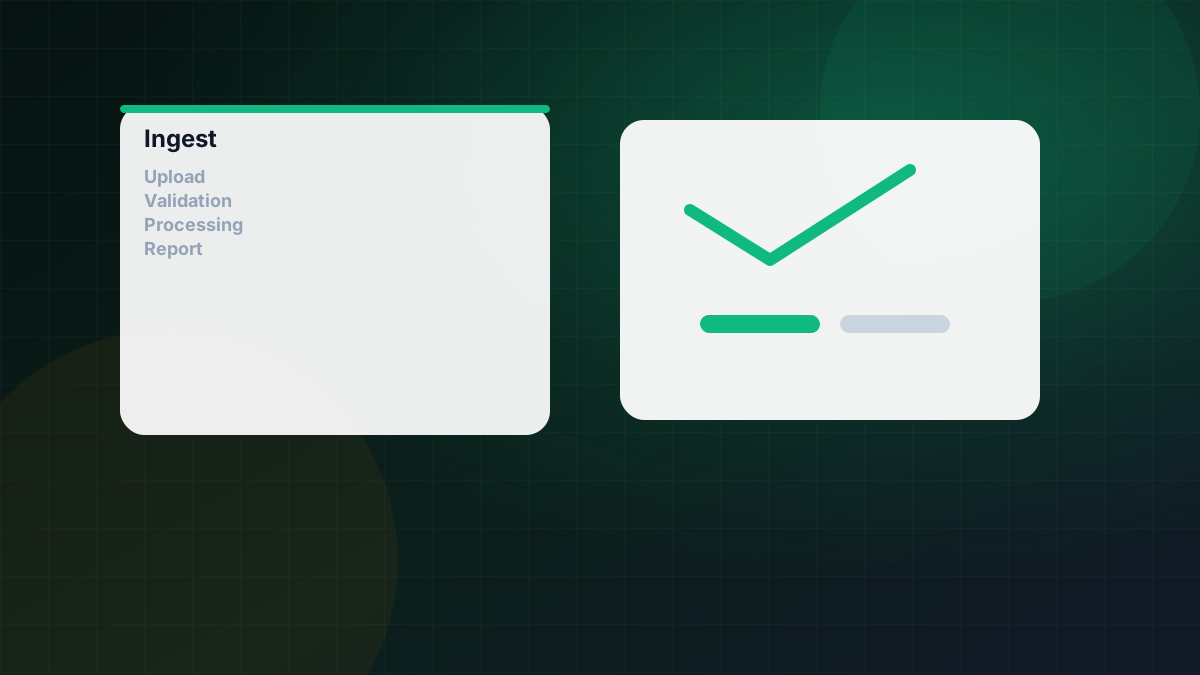
What you see:
- Clean drag-and-drop zone for documents
- Progress steps: 1. Upload → 2. Validation → 3. Processing → 4. Report
- Storage usage and tenant branding (Ontario Manufacturing example)
- Sidebar navigation including direct Scope 3 access
- Note about ECCC year-specific factors (critical for accuracy)
Upload any combination of:
- Mill Test Certificates (MTCs) and supplier invoices → Cat 1 Purchased Goods
- Fuel receipts / transport slips → Cat 4 Upstream Transportation
- Waste manifests and disposal records → Cat 5 Waste
- Utility bills, LIMS assays, SAP/ERP exports for cross-validation
The system supports hydro bills (Scope 2), fuel (Scope 1/3), waste/travel (Scope 3).
Step 2: AI Extraction + Automatic Categorization
Once uploaded, the Gemini-powered pipeline:
- Performs OCR/vision extraction on PDFs, images, and scans.
- Pulls dates, quantities (kg, litres, tonnes), suppliers, grades, facility references.
- Maps each line item to the correct GHG Protocol Scope 3 category.
- Flags confidence and any gaps for human review (human-in-the-loop).
No manual column matching. No copy-pasting factors.
Step 3: Review Scope 3 Breakdown in Real Time
After processing, view results in the dashboard or Scope 3 section.
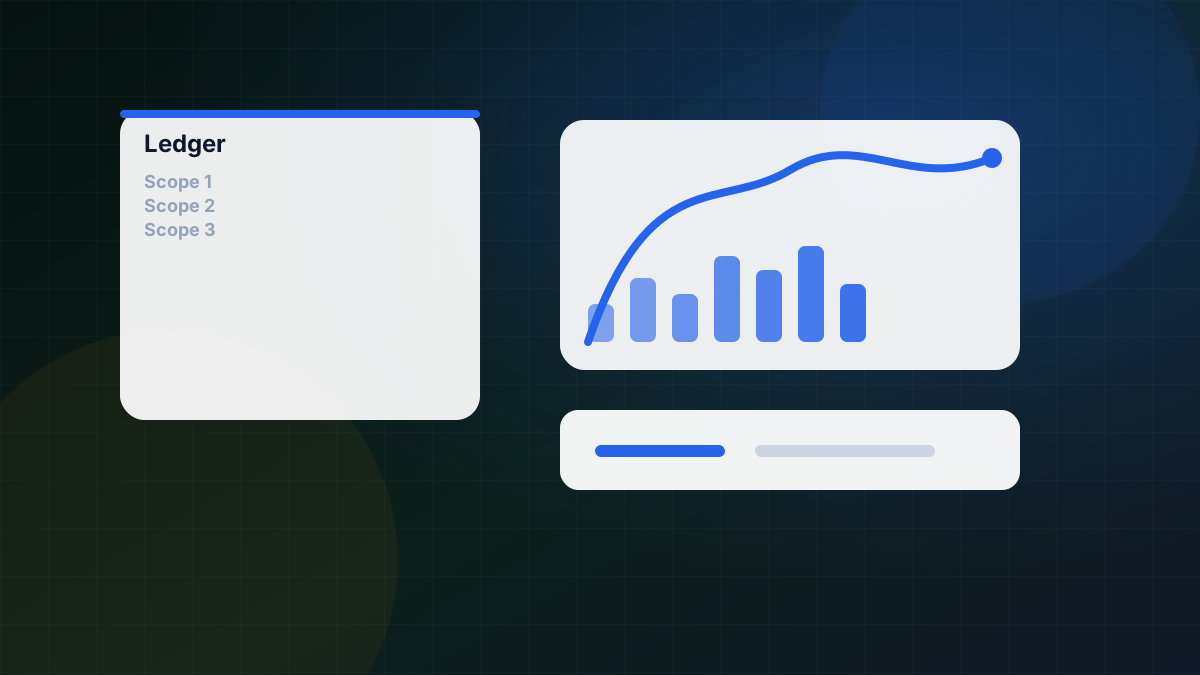
Key views you get immediately:
- Scope 3 total (and per-category breakdown)
- Emissions Distribution pie (Scope 1 vs 2 vs 3)
- Per-document lineage: which MTC or fuel slip drove which tonnes
- Compliance tasks tied directly to your data
The system surfaces the 15 GHG Protocol Scope 3 categories with focus on the ones that matter most for Ontario manufacturers:
- Category 1: Purchased goods & services (steel, cement, resins, chemicals — often 60-80% of total Scope 3)
- Category 4: Upstream transport
- Category 5: Waste generated in operations
- Plus Category 2 (capital goods), 3 (fuel & energy), 6 (business travel), etc. as data allows.
Step 4: Ontario-Specific Calculation Engine Runs Automatically
Behind the scenes:
- Physical data first: weights, grades, distances, process routes from your documents.
- Mass balance where applicable (especially steel, concrete, metals).
- ECCC factors (National Inventory Report, province-specific Supplement Tables) + IESO Ontario electricity factors.
- Supplier-specific factors when provided in MTCs or declarations; intelligent EEIO fallback otherwise.
- Full versioning: every calculation records the exact factor library + version used.
This is exactly what banks, OEMs, and Competition Bureau investigators want to see.
Step 5: Full Audit Trail + Substantiation for Bill C-59 / CBAM / OEMs
Every Scope 3 number comes with:
- Source document ID and uploader
- Extracted fields
- Factor applied + version + origin
- Assumptions and gaps explicitly flagged
- Immutable ledger entry
This is the "calculation trail for verification" regulators and customers now require.
Real-World Ontario Example (Hamilton / Nanticoke Style Facility)
Imagine a steel or auto-parts plant uploading:
- 12 MTCs for purchased steel coil and ferroalloys (Cat 1)
- 47 fuel receipts for inbound trucking and rail (Cat 4)
- 8 waste manifests (Cat 5)
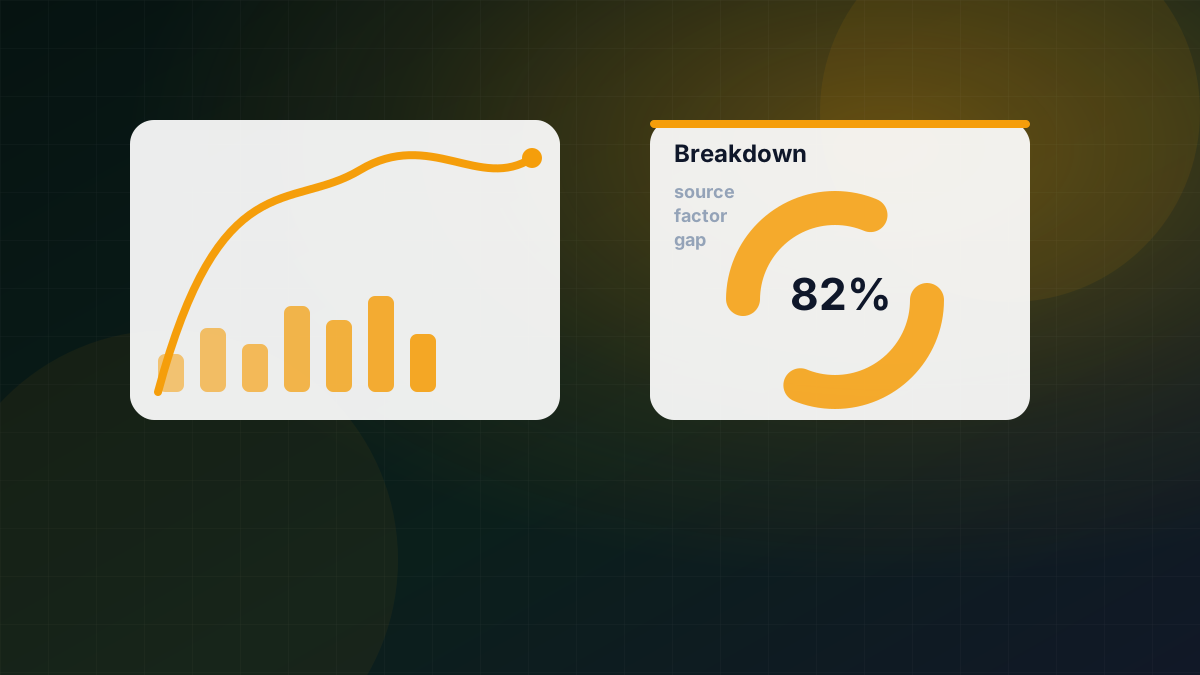
VantageHSG output (illustrative based on live engine):
- Cat 1: 47,300 tCO₂e (driven by actual material grades + EAF vs BF routes)
- Cat 4: 2,180 tCO₂e (distance + mode specific)
- Cat 5: 890 tCO₂e
- Total Scope 3: 50,370 tCO₂e with full provenance
Contrast this to a spreadsheet that would have given you one blurry number with no evidence.
Ontario Regulatory Context You Cannot Ignore (2026)
- Bill C-59: Misleading environmental claims now carry real private right of action and massive penalties. Your Scope 3 methodology and substantiation file must be defensible.
- CBAM Phase 2: EU customers are already asking for embedded carbon per shipment. Default factors are punitive.
- Bank & CSDS requirements: OSFI B-15 + Canadian Sustainability Disclosure Standards mean your lenders will soon score your carbon data quality. Poor Scope 3 = higher borrowing costs.
- OEM pressure: Every Tier 1/2 supplier to the big three is receiving product-level Scope 3 questionnaires.
VantageHSG was built specifically for this stack.
FAQ: How to Calculate Scope 3 Emissions in Ontario
What documents do I actually need to start?
Top 80% of your Scope 3 usually lives in: MTCs + supplier invoices (Cat 1), fuel receipts for inbound logistics (Cat 4), and waste disposal records (Cat 5). Upload those first.
Do I still need supplier-specific data?
Not always. The system calculates from your own operational records using mass balance and physical drivers. Supplier data is used when available and improves accuracy.
Is spend-based calculation acceptable?
It is the weakest method and increasingly unacceptable for verification or high-stakes reporting. VantageHSG prioritizes activity data and mass balance.
How does this help with Bill C-59?
Every calculation includes the exact methodology, factor versions, source documents, and assumptions — exactly the "substantiation" the law now requires.
How often do I need to update?
Continuously. Forward documents as they arrive. The ledger stays current. Annual reporting becomes a button, not a project.
Can my whole team contribute?
Yes. Shared inbox + role-based access. Operations uploads MTCs. AP forwards fuel slips. One ledger.
What about NPRI and O. Reg. 390/18?
The same data pipeline supports your provincial reporting and gives you the Scope 3 layer most facilities are missing.
Start Calculating Scope 3 the Right Way Today
You don't need another consultant report that sits in a drawer.
You need the data infrastructure that turns the documents your plant already produces into permanent, queryable, defensible carbon intelligence.
Ready to see it on your data?
- Send one source document for a free sample report
- Watch the 30-second product demo
- Book a 90-day paid pilot
- Sign in to the dashboard (or create your Ontario manufacturing tenant)
VantageHSG — Carbon data infrastructure built for Ontario manufacturers who actually emit.
Pair this guide with our upcoming YouTube video walkthrough of the exact same automated Scope 3 flow.
Related reading:
- Why Now: Bill C-59, CBAM, and Bank Scope 3 Demands
- Mass Balance Methodology for Ontario Manufacturing
- CBAM Phase 2 for Ontario Exporters
- Industries we serve: Steel, Concrete, Automotive Parts, Electroplating
This post was updated June 2026 with live screenshots from the VantageHSG platform. All numbers in examples are illustrative of real engine output.